There is no single number, and any shop that gives you one is guessing. Quality film carries a ten year warranty. How long it actually lasts on your car comes down to four things: where it parks, how it is washed, the kilometres it does, and how well it was fitted. Installation matters most.
Why nobody can give you one number
Every shop gets asked this and most answer with a number because a number sounds confident. The honest answer is that two identical cars, filmed on the same day with the same product, can end up years apart.
One lives in a garage, gets washed properly, and does school runs. The other sits in an uncovered carpark at work all day, goes through an automatic wash on weekends, and does highway kilometres. The film is the same. The outcome is not.
So rather than a number, here is what actually decides it.
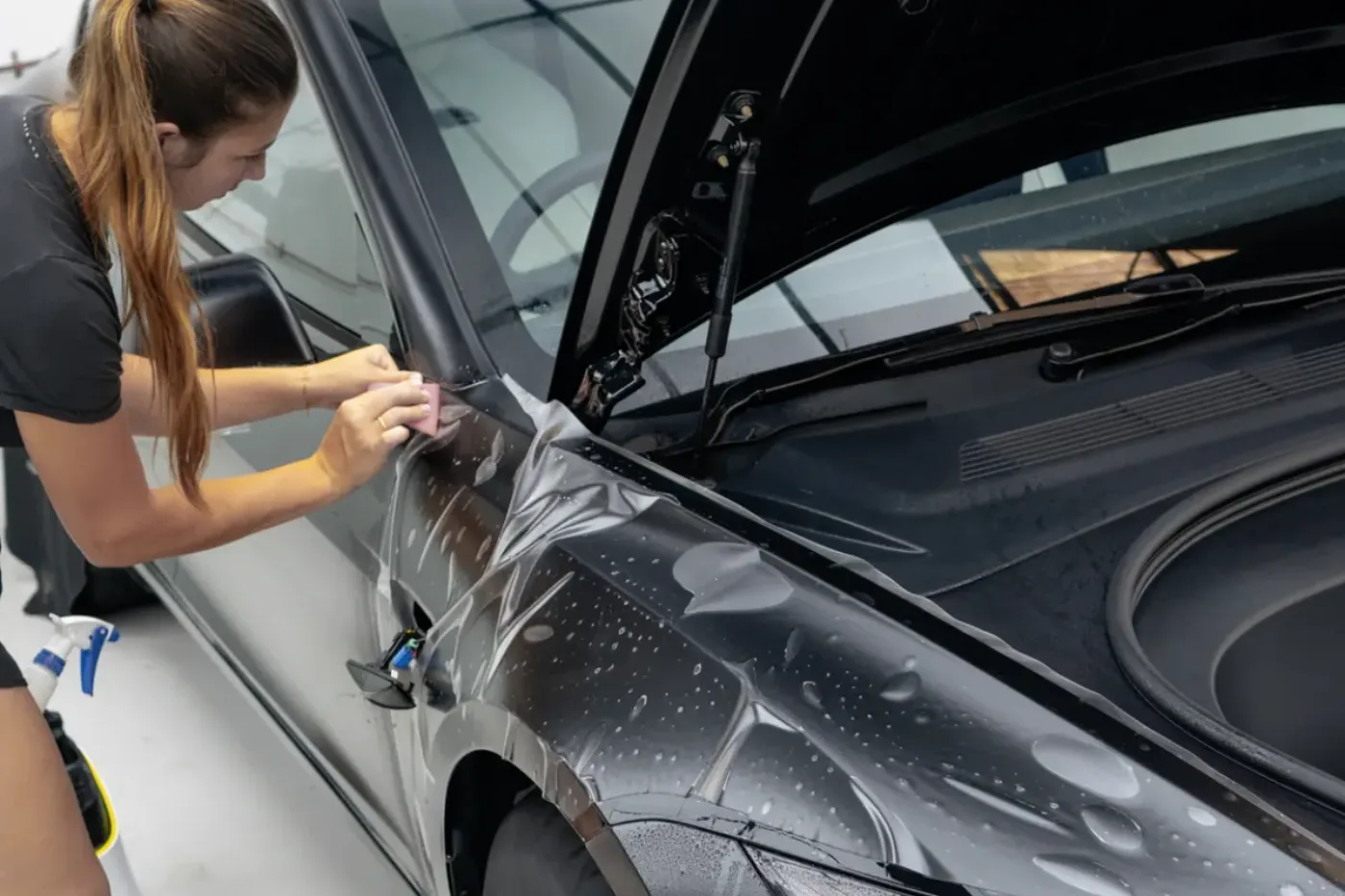
The four things that determine how long your film lasts
Where the car parks. This is the biggest single factor. A car that sits outside is under constant UV, and in Brisbane that is not a small thing. Even part time covered parking makes a measurable difference.
How it is washed. Proper washing extends film life. Automatic washes with spinning brushes catch edges and drag at them. High pressure nozzles held close to an edge will lift it. Leaving bird droppings and sap to bake on for a week does damage that no film fully shrugs off.
Kilometres and road type. Highway driving loads the front of the car with impact. A car doing long runs on coarse chip seal is asking more of its film than one doing short suburban trips.
How well it was installed. More on this below, because in our experience it outweighs the other three.
What Queensland does to film that cooler states do not
South east Queensland throws the full set at a car, all at once.
UV intensity is the obvious one, and it is what drives yellowing over time. Less obvious is heat cycling. A dark bonnet in a Brisbane summer gets extremely hot, then cools overnight, then does it again the next day. That repeated expansion and contraction works on the adhesive and on the edges, which is where film gives up first.
Then there is the humidity and the storm season, which pushes moisture at any edge that was not sealed properly, and the organic fallout. Bird droppings and tree sap etch harder and faster in a subtropical climate than they do further south.
Which panels go first
Horizontal surfaces. Bonnets and anything else facing straight up take the most direct sun and catch everything that falls out of the sky, from bird droppings to sap to whatever the last storm left behind.
That is worth knowing when you are deciding coverage. The panels most people worry about are the ones that get hit by stones. The panels that age the film fastest are the ones pointing at the sky.
What the end of its life actually looks like
Film does not fail all at once. Two things show up first.
Edge lift. The film starts releasing at the edge of a panel. Once an edge is open, dirt and moisture get under it and it goes backwards from there. Edges are behind a large share of the early failures we see.
Stone chip saturation. The film has simply done its job until it has nothing left to give. The front bumper and bonnet leading edge take enough impacts that the surface looks marked up. Nothing is wrong with the film. It has absorbed what would otherwise be in your paint.
Yellowing and haze do happen, but they are usually further down the track than the two above.
Installation matters more than the film
This is the part most people get backwards. They research film brands for a fortnight and then pick an installer on price.
A good installer using good film will outlast a poor installer using the same film, by a long way. Because almost all early failure is edge failure, and edges are entirely down to how the job was done.
Where the panel allows it, we wrap the edges, so the film goes around and there is no cut line sitting exposed on the visible surface. It takes longer, it uses more material, and it is the single biggest thing separating film that lasts from film that starts lifting in year three.
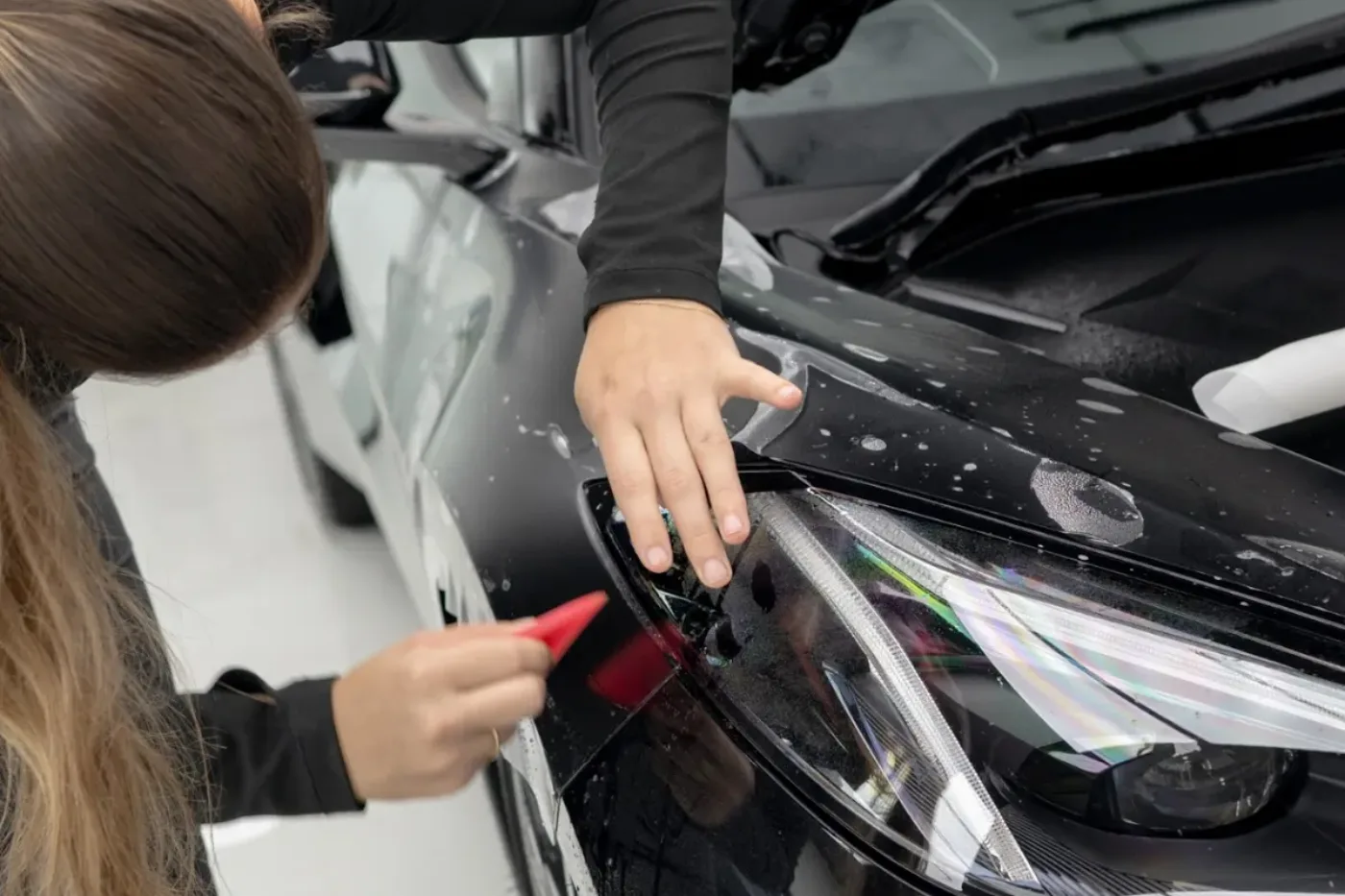
We install Llumar Platinum, which carries a ten year film warranty.
When we tell people not to get film
Two situations, and we would rather say so up front than take the booking.
If the paint has been resprayed. The film manufacturer warranty does not cover application over resprayed paint. It is written for factory finish. We can still do the work, but you need to understand you are outside the warranty, and respray quality varies enormously. If your car has had panel work, tell us before you book.
If the budget forces a choice. Plenty of people come in wanting film and a coating and can only afford one. Depending on the car and how it is used, the coating is sometimes the better spend, and we will tell you that even though it is the smaller job. Film and coating do different things. Film stops physical impact. A coating does not, and no amount of marketing changes that.
What extends film life, and what destroys it
The things that help are unglamorous. Wash it properly and regularly. Get bird droppings and sap off within a day or two rather than letting them bake. Park under cover when you can, even part of the time. And a ceramic coating over the top of the film makes it easier to clean and adds UV defence, which is why it is included in several of our packages.
The things that hurt: pressure washing close to edges, automatic car washes with brushes, letting contamination sit, and simply never maintaining it at all. That last one is the most common by a distance. Film is not fit and forget.
What is underneath when the film comes off
This is the part that answers the question better than any lifespan figure.
When we take old film off a car, the paint under it is effectively as new. You can see exactly where the film stopped, because the protected paint sits against panels that have had years of the same Brisbane sun and road grit without cover. The difference is obvious.
That is the actual product. Not a number of years on the film, but the condition of the paint when the film has done its work and comes off.
Does film last ten years in Queensland?
The Llumar Platinum warranty runs ten years. Whether your car reaches it depends on where it parks, how it is washed, the kilometres it does and how well it was fitted. A garaged, well maintained car has every chance. A car that lives outside and goes through automatic washes will not.
Does film go yellow?
Modern quality film is far more UV stable than the products that gave film a yellowing reputation years ago. When it does happen it is late in the life of the film, and it is not usually the first thing you notice. Edge lift and chip saturation come first.
Can film be applied over a respray?
Physically yes, but the manufacturer warranty is written for factory paint and does not cover application over resprayed panels. If your car has had panel work, tell us before booking so we can talk through it honestly.
Should I put a ceramic coating over the film?
Yes. It makes the film easier to wash, adds UV defence, and means the whole car cleans the same way rather than the filmed panels behaving differently. It is standard in our packages.
Will removing the film damage my paint?
Not with quality film removed properly. The paint underneath comes up effectively as new, and usually looks better than the unprotected panels around it.
Washing is the biggest single factor in how long your film lasts. Here is exactly how to wash a coated or filmed car, and what to keep well away from it.
Thinking about film for a new car?
Tell us the car and how it gets used. We will tell you honestly what coverage is worth it and what is not.