Two buckets, a pH neutral shampoo, a clean mitt, and no automatic car washes. Wash every two to three weeks, monthly at the absolute outside, and get bird droppings and sap off within a day, and keep a pressure washer away from film edges. That is most of it. A coating makes washing easier, it does not replace it.
Why this matters more than the coating did
Every guide we write ends up back here. The film that lasts and the film that lifts at year three are usually the same film. The coating that still beads at year five and the one that stopped working at year two are usually the same coating. What separates them is how the car got washed.
It is the one variable you control completely after you drive away, and it is the one most people quietly ignore because nobody ever explained it properly.
The two bucket method
If you change one thing, change this.
One bucket holds your shampoo solution. The second holds clean rinse water. Both should have a grit guard in the bottom. You load the mitt from the soap bucket, wash a section, then rinse the mitt in the rinse bucket before it goes anywhere near the soap again.
The point is that the dirt you just pulled off the car ends up in the rinse bucket and stays there, instead of being carried back onto the paint on the next pass. Washing out of a single bucket means you spend the whole wash dragging grit across the finish. That is where swirl marks come from, and a coating will not save you from it.
The order of operations
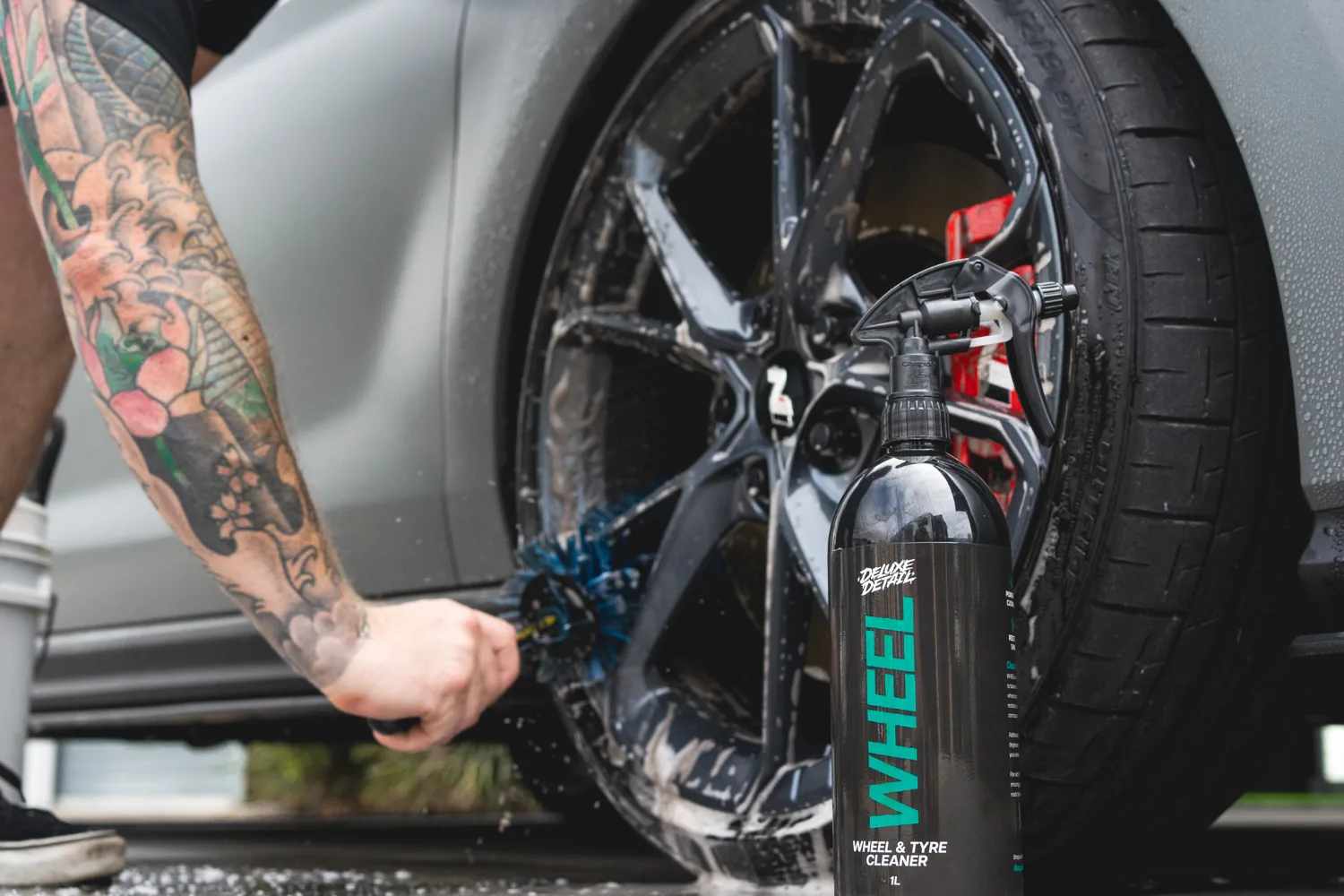
Wheels first, with separate equipment. Brake dust is the most abrasive thing on the car and it should never touch the mitt you use on the paint.
Rinse the whole car before you touch it. Loose grit needs to come off with water, not with your mitt.
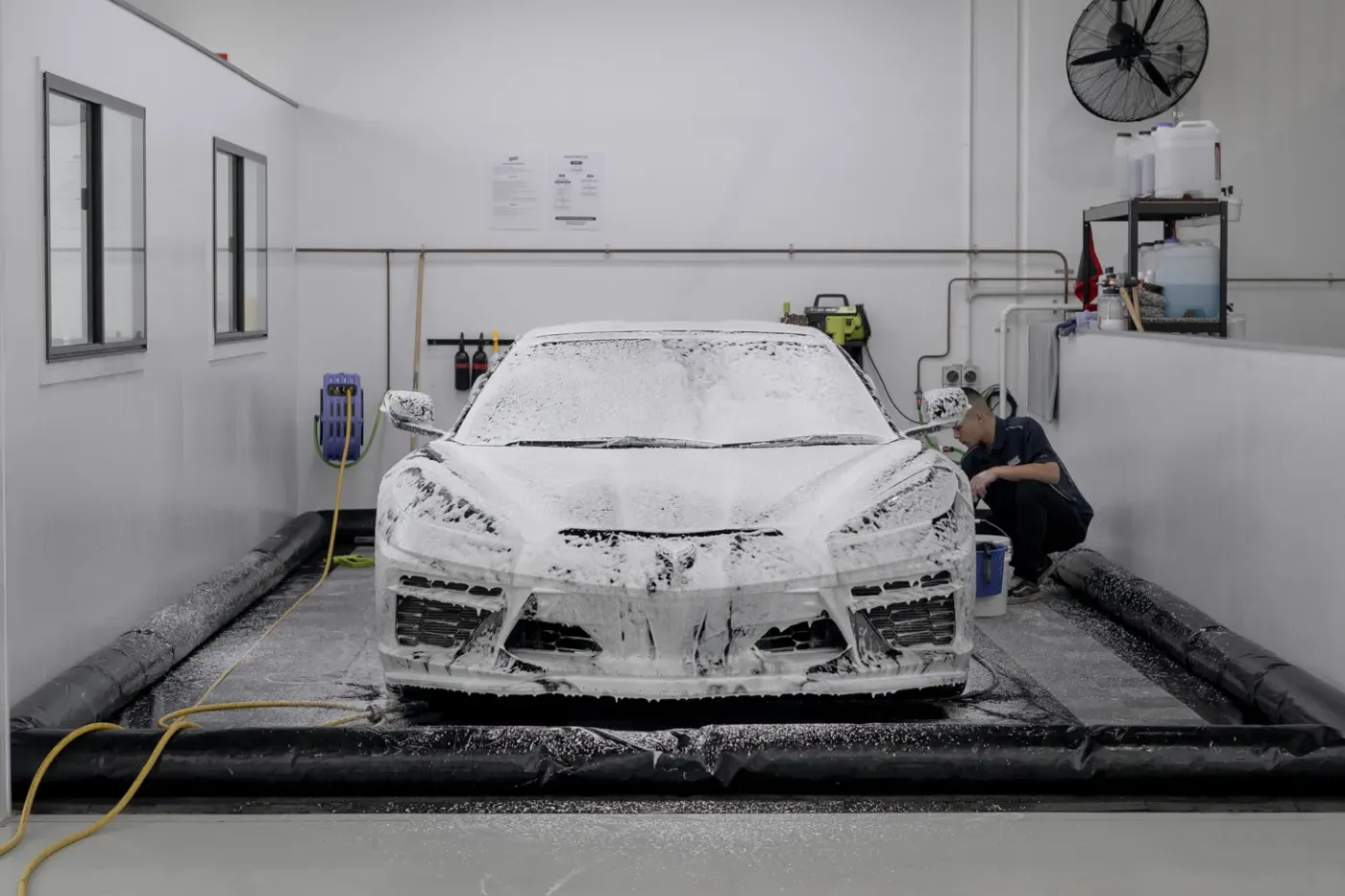
Wash top down, in sections. The lower quarters of the car are the dirtiest, so they come last.
Rinse and dry properly. A clean microfibre drying towel, or a blower if you have one. Do not let it air dry, especially in Brisbane, because the water spots that leaves behind are minerals baking onto the surface.
Never in direct sun. Product drying on a hot panel is how you get streaking and spotting. Early morning, late afternoon, or in the shade.
If the car has paint protection film
Wash it the same way. The process does not change. There is one thing to be careful about, and it is the thing that causes nearly every early film failure we see.
Keep a pressure washer away from the edges. A high pressure nozzle held close to a film edge will lift it, and once an edge is open, dirt and moisture get underneath and it goes backwards from there. Stand back, and never aim straight into an edge line.
If the film has been coated over the top, which is how we do it, the whole car cleans the same way and you do not have to think about which panels are filmed.
What to keep out of the equation
Automatic tunnel washes. The spinning brushes are the fastest way to swirl a coated car and to catch a film edge and peel it. If you take a protected car through one, you have undone what you paid for. This is not us being precious, it is the single most common cause of damage we see.
Harsh detergents and dish soap. A pH neutral car shampoo is what you want. Aggressive chemicals strip the performance out of a coating faster than time does.
Old towels, sponges and anything gritty. If it has been on the ground, it is finished. Retire it.
Polishing or compounding the film. Film is not paint. Treating it like paint abrades the topcoat and removes the self healing layer.
How often, in this climate
Ideally every two to three weeks, and at least once a month. If the car lives outside all the time, make it fortnightly.
More important than the interval is not letting contamination sit. Bird droppings and tree sap etch faster here than almost anywhere else in the country, and in summer they will do damage in days rather than weeks. Get those off within a day or two rather than waiting for wash day. Keep a quick detailer and a microfibre in the boot and it is a thirty second job.
What you actually need
The kit is short and it lasts for years. Two buckets with grit guards, a quality wash mitt, a pH neutral shampoo, a large microfibre drying towel, a separate wheel bucket and brush, and a quick detailer for spot cleaning.
That is genuinely the list. You do not need a shelf of products, you need the right six things and the discipline to use them in order.
We stock the range we actually use on customer cars in our shop, and Deluxe Crew members get 10 percent off the car care range for life, which is included with every package we install.
Can I take a ceramic coated car through an automatic car wash?
No. The spinning brushes in tunnel washes cause swirl marks on coated paint and can catch and lift the edges of paint protection film. It is the most common cause of avoidable damage we see on protected cars.
How often should I wash a ceramic coated car?
Ideally every two to three weeks, and at least once a month. Fortnightly if the car lives outside all the time. More important than the interval is removing bird droppings and tree sap within a day or two, because in a Brisbane summer they etch in days.
What soap should I use on a ceramic coated car?
A pH neutral car shampoo. Avoid dish soap and aggressive detergents, which strip the performance out of a coating faster than normal wear does.
Do I wash paint protection film differently?
The process is the same. The one difference is to keep a pressure washer away from film edges, because high pressure held close to an edge can lift it, and open edges are where most early film failures start.
What is the two bucket wash method?
One bucket of shampoo solution and one of clean rinse water, both with grit guards. You rinse the mitt in the clean water after every section so the dirt you removed stays in the bucket instead of being dragged back across the paint.
Want the products we actually use?
The same range we use on customer cars, with 10 percent off for life as a Deluxe Crew member.