In Queensland the front side windows must let through at least 35 percent of light. Everything behind the driver must let through at least 20 percent, as long as the car has an external mirror on both sides. Reflectance cannot exceed 10 percent. Those limits apply to the glass and the film together, not the film on its own.
The rule that catches almost everybody
The limit is not about the film. It is about how much light gets through the window when the job is finished.
Queensland Transport and Main Roads states plainly that the requirement includes the combination of any applied tint and factory tinted glass. So if your car left the factory with privacy glass in the rear, that glass is already using up most of the allowance. Add a dark film on top and the finished result can sit under 20 percent even though the film itself was nowhere near that dark.
This is why we cannot simply put the same film on every window of every car. On a vehicle with factory privacy glass, the rear usually takes a light film. The glass has done the darkening already, and what the car still needs is heat rejection, not more darkness.
Front windows: 35 percent
The two windows either side of the driver must transmit at least 35 percent of visible light. This aligns Queensland with the national Australian Design Rules that apply to new vehicles, so it is not a state quirk you can drive around.
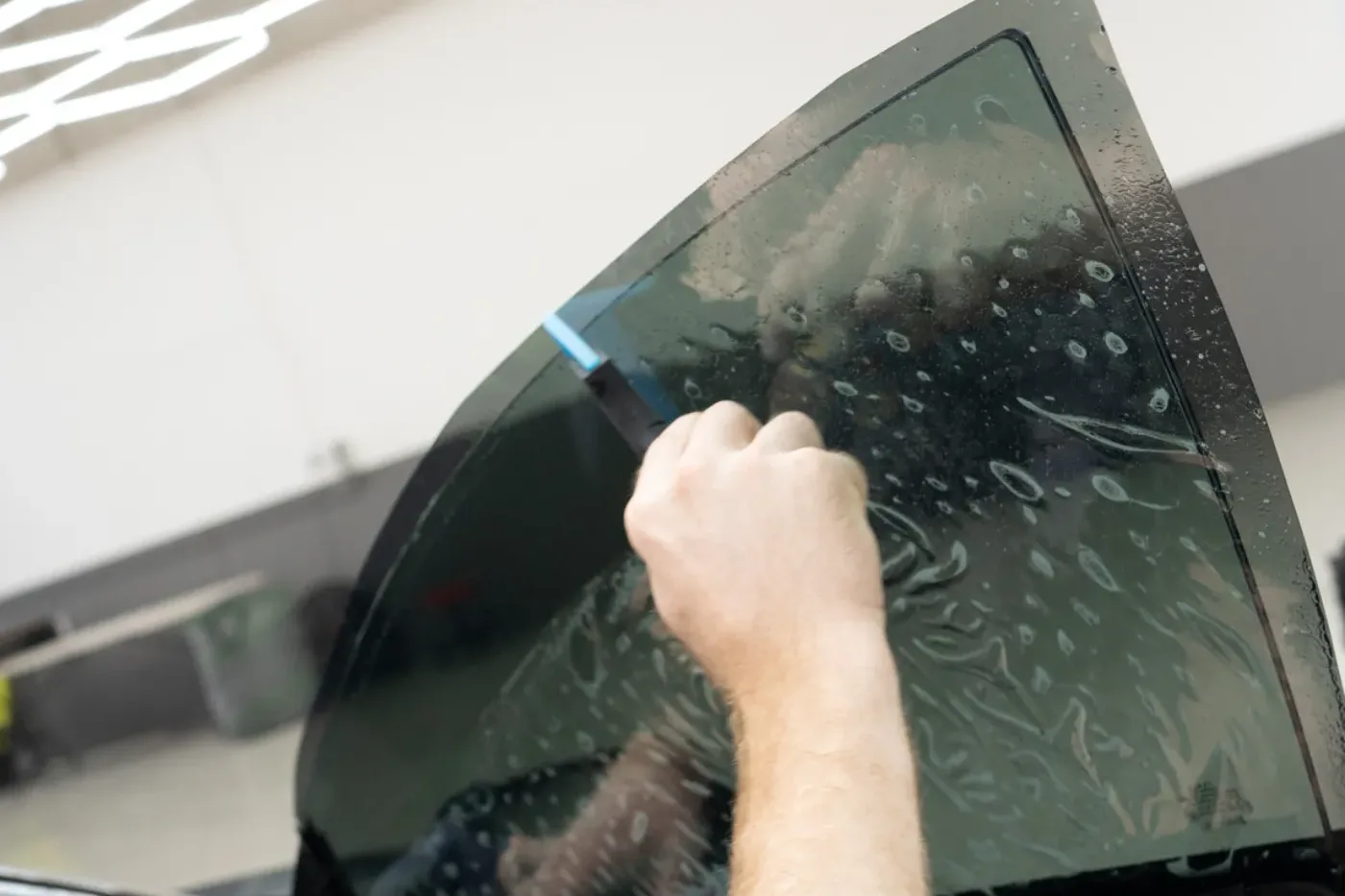
There is no factory privacy glass to account for here on most cars, because manufacturers do not put it in the front. The 35 percent is effectively about the film alone.
Behind the driver: 20 percent, with a condition
Everything behind the driver seating position, which means the rear side windows and the rear windscreen, must transmit at least 20 percent, provided the vehicle has an external rear vision mirror on each side.
That mirror condition is not decoration. It exists because the law will only let you lose that much rearward visibility through the glass if you have mirrors on both sides to compensate. Almost every modern car does, but it is a real requirement rather than an assumption.
Utes and vans are not the same as cars
This one surprises people, and it is worth knowing before you assume you are limited to 20 percent.
On a vehicle designed primarily for carrying goods, film down to zero percent light transmission may be applied to the windows behind the driver, again provided there are rear vision mirrors on both sides. That covers a lot of what is on Brisbane roads: work utes, vans and similar.
If you drive a dual cab that is genuinely a goods carrying vehicle, your options behind the driver are wider than a sedan owner has. Ask us and we will tell you where your specific vehicle sits, because the classification is about how the vehicle is built rather than what you use it for.
The windscreen
Windscreens on vehicles built from 1 July 1971 onward must transmit at least 75 percent of light, which rules out tinting the main viewing area.
A band across the top is allowed. It must not extend lower than a horizontal line touching the highest point of the arc swept by the original wiper blades. That is the visor strip you see on some cars, and it is legal when it stays above that line.
Full windscreen film is a different matter. Because the limit counts the glass and the film together, putting even a light film across the whole windscreen drops the finished result below 75 percent. A 70 percent film over glass that already transmits around 75 to 80 percent lands somewhere near the mid fifties. It is a genuine heat rejection upgrade and it is popular, but it is not road legal in Queensland, so it sits in the same category as darker than legal side tint. We will do it, and it is done on a waiver with the owner carrying that responsibility.
Reflectance: the limit nobody mentions
Separate from darkness, no film on any window or windscreen may have a reflectance above 10 percent.
This is what rules out the mirrored look. A film can be perfectly legal on light transmission and still fail on reflectance, and it is the sort of thing that gets picked up at inspection when the owner had no idea there were two numbers to satisfy.
Darker does not mean cooler
This is the single biggest misunderstanding we deal with, and it costs people money.
Almost everyone who asks for the darkest legal tint is really asking for a cooler car. But darkness and heat rejection are two different properties. Visible light transmission is what your eye sees. Heat comes overwhelmingly from infrared, which is invisible.
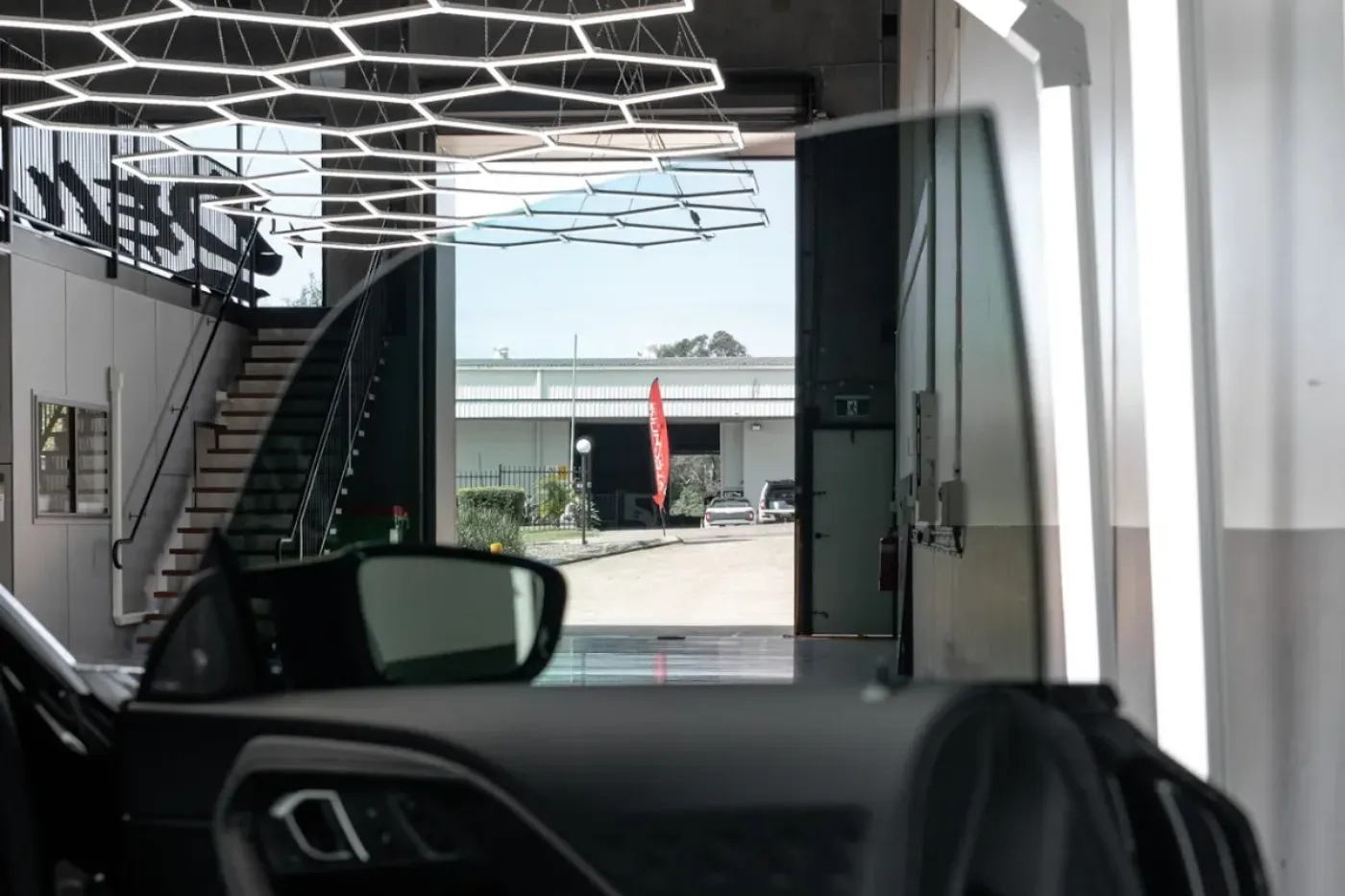
A cheap dark film can look aggressive and still let the cabin cook. A quality ceramic film at a legal, lighter shade can reject far more heat than a dark dyed film ever will. We install Llumar Vantage, which rejects up to 96 percent of infrared, and it does that at legal shades.
If your actual goal is a car that is bearable in February, the number that matters is infrared rejection, not how dark the glass looks from the outside. Chasing darkness to solve a heat problem is solving the wrong variable.
The other reason people go dark is the look, or privacy. Those are fair reasons and we are not going to pretend otherwise. Just be clear with yourself which one you are buying, because if it is heat you are chasing, film quality will get you further than film darkness.
What actually happens if your tint is illegal
Two things we see come through the studio.
Defect notices. Owners get pulled up, the vehicle is issued a notice, and the film has to come off and be redone to a compliant level. You pay twice.
Failed safety certificates. Tint is checked at inspection. If you are selling the car or transferring registration and the glass is over the limit, the certificate does not issue until it is fixed. That timing is usually the worst possible moment to discover it.
Vehicles that are not driven on the road
Show cars, track cars and vehicles not used on public roads sit outside the road rules, and darker film is possible on them.
If that is what you are after, we will discuss it with you, and it is done on the basis that the vehicle is not road legal in that configuration and the owner carries that responsibility. For anything that is going to be driven on a Queensland road, we install to the legal limits, because we would rather you kept your money than paid us twice.
If your car is an EV, some roof glass cannot take conventional tint at all. We explain which cars and what the alternative is in does an EV need different paint protection.
What is the darkest legal tint in Queensland?
35 percent light transmission on the front side windows and 20 percent behind the driver, provided the vehicle has an external mirror on each side. Those figures apply to the glass and film combined. Goods carrying vehicles such as many utes and vans may go to zero percent behind the driver.
Does factory privacy glass count towards the limit?
Yes. Transport and Main Roads specifies that the requirement includes the combination of applied tint and factory tinted glass. Privacy glass has already used most of the allowance, so only a light film can go over it.
Can I tint my windscreen in Queensland?
Not the main viewing area. Windscreens on vehicles built from 1 July 1971 must transmit at least 75 percent of light. A band across the top is allowed provided it does not extend below a horizontal line touching the top of the original wiper sweep.
Will darker tint keep my car cooler?
Not necessarily. Heat comes mostly from infrared, which is invisible, so darkness and heat rejection are different properties. A quality ceramic film at a legal shade will out-perform a dark cheap film on cabin temperature.
What happens if my tint is too dark?
You risk a defect notice requiring the film to be removed and redone, and the vehicle will not pass a safety certificate inspection, which matters when you sell or transfer registration.
Sources: Queensland Department of Transport and Main Roads guidelines on non-standard tinting materials for light vehicles, and the Queensland Light Vehicle Inspection Manual. Rules change. If you are reading this well after publication, check the current TMR guidance or ask us.
Want it as dark as legally possible, and actually cooler?
We will tell you what your specific car can take once factory glass is accounted for, and what will make the biggest difference to cabin heat.